|
Our Mission: Giving
kids a voice
Our Vision: Developing
communication skills through performance arts education
The Overall Goal of the Cabaret Institute for Kids: To give kids a forum for communication using
their own innate artistic abilities developed through music education. We hope to help continue
and support the tradition of cabaret, passing it on to future generations. By introducing kids and teens to this art
form, providing them meaningful one-on-one interaction with professional cabaret artists, and working with students to
develop their own cabaret performance, we hope to enrich their lives in the process.
|
|
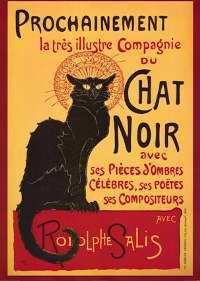 Cabaret is
an art form featuring comedy, song, dance, and story telling. Its birthplace was turn-of- the-century Paris
at Le Chat Noir – the gathering place of artists, musicians, poets and writers of the day. It was
the Starbucks of pre-World War France, where artists tested the performance of their work on a small audience in an impromptu
setting. The enlivening dynamic of this art form is the authenticity of expression by the artist. Without
theatrical enhancement, in an intimate setting, the artist gives a bare bones performance. It is the transparency of the artist’s
performance in which everyone shares without the fourth wall of a theatrical performance. Cabaret is
an art form featuring comedy, song, dance, and story telling. Its birthplace was turn-of- the-century Paris
at Le Chat Noir – the gathering place of artists, musicians, poets and writers of the day. It was
the Starbucks of pre-World War France, where artists tested the performance of their work on a small audience in an impromptu
setting. The enlivening dynamic of this art form is the authenticity of expression by the artist. Without
theatrical enhancement, in an intimate setting, the artist gives a bare bones performance. It is the transparency of the artist’s
performance in which everyone shares without the fourth wall of a theatrical performance. The turn of the 20th century introduced a revolutionized cabaret culture. Performers
included Josephine Baker and Brazilian drag performer João Francisco dos Santos (aka Madame Satã). Cabaret performances could range from political satire
to light entertainment, each being introduced by a master of ceremonies, or MC.
In the United States, cabaret diverged
into several different and distinct styles of performance mostly due to the influence of Jazz Music. Chicago cabaret focused
intensely on the larger band ensembles and reached its zenith in the speakeasies, and steakhouses of the Prohibition Era.
Cabaret in the United States began to
disappear in the sixties, due to the rising popularity of rock concert shows and television variety shows. Perhaps the greatest
living American cabaret performer is Eartha Kitt, famous for her role as Catwoman in the television series Batman.
Cabaret is currently undergoing a renaissance of sorts in the United States as new generations of performers
reinterpret the old forms in both music and theatre. |